How does the company run when I'm not there?
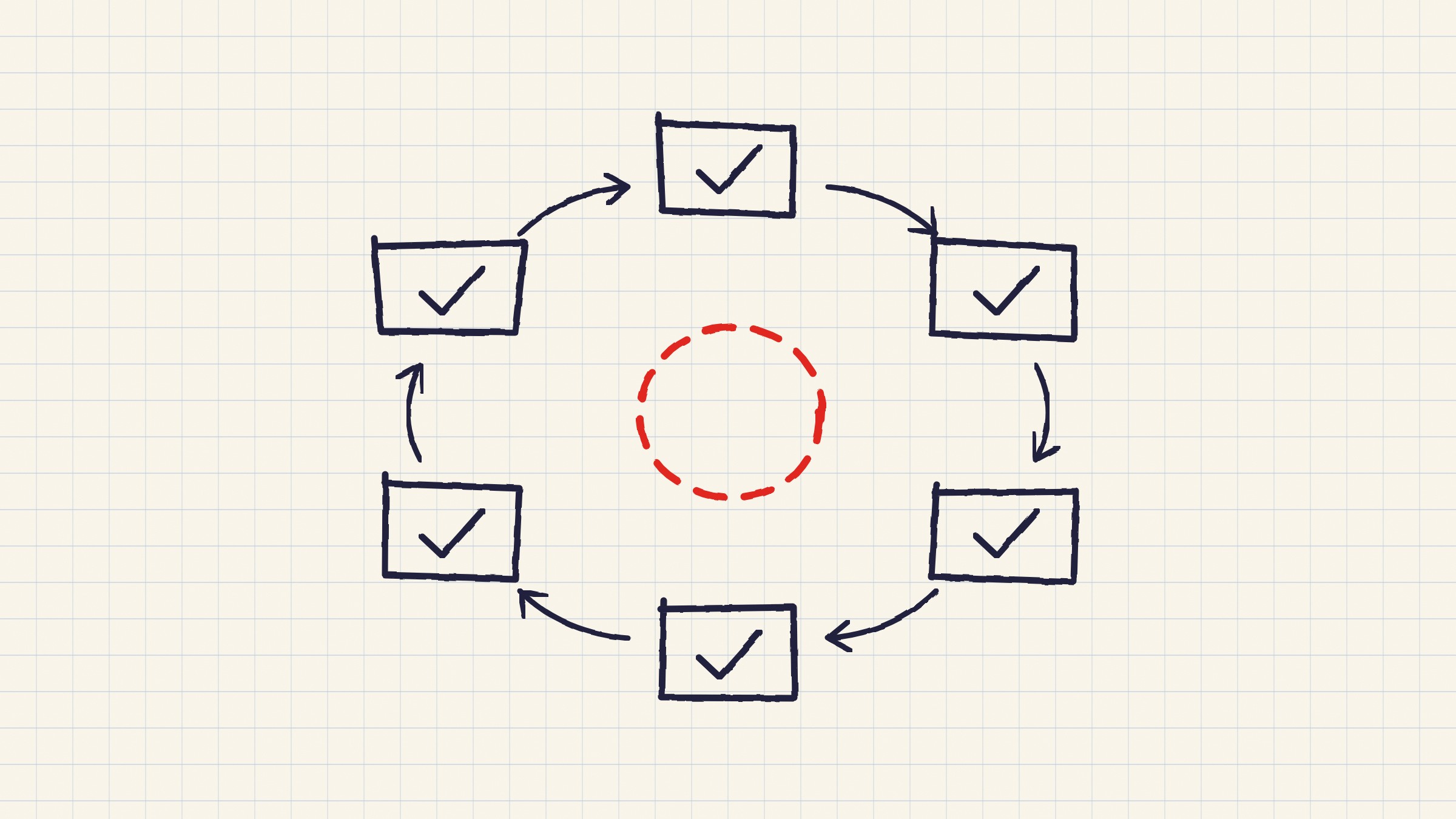
The real test of any company: its owner takes 4 weeks off without a phone, and comes back to find it better than he left it.
The story
Most business owners work in their company, not on their company. I was one of them.
In the early days of SELF I did everything: shaped the idea, dealt with clients, and followed every detail. And I believed the fix when the work grew was a highly paid employee. A smart hire, and the problem is solved.
It wasn't. The employee arrives and doesn't do what I had in mind. Not because he isn't capable. Because he doesn't have exactly what to do.
The idea
A company doesn't run without you on smart people alone. It runs when every task has one fixed set of steps that anyone can follow.
An employee doesn't work on salary, he works on clarity. A smart person without a system asks, then guesses, then does it his own way, and you redo everything.
A real example
The biggest restaurant chain in the world has its system written down so well that an 18-year-old gets you the same result in any branch. Not because he's a genius. Because the system is.
And nobody builds a factory on steps that change every day. If writing the steps down still feels random, there's no system yet.
How to apply it
- Do everything yourself first. Collect data and experiment until you reach the way that actually works. Don't write a system for something that hasn't proven itself.
- Once the way is proven, write down every step you take, one by one. This is what they call an SOP.
- Give every task an owner, and make sure they've studied it and are capable of it. One person can hold more than one task, but every task has to be written.
- Put someone after them to review quality. That way a mistake gets caught before it reaches the client.
- Hand over the decision with the task. Review in the first period, then let the person carry the consequences of their decision.
What you gain
You get out of the daily work and do the things nobody else can do. And you know exactly how far you can go if the work grows.
And the company becomes worth something on its own, not because you're in it.
The takeaway
The biggest factor is time. You need a long time before you can trust that the work runs without you. But that time is the most valuable investment you put into your company.
If you took 4 weeks off tomorrow, what would happen to your company?
Further reading: The E-Myth Revisited — Michael Gerber